

How much will my freight costs be? Depending on the weight of your honey products, the weight will vary.  All prices are in New Zealand $.          

 Australia  0 - 1kg  $27.21
   1 - 2.5kg  $35.86
   2.5 - 5kg  $51.26
   5 - 10kg  $70.85
 East Asia & North America  0 - 1kg  $47.86
   1 - 2.5kg  $68.69
   2.5 - 5kg  $107.72
   5 - 10kg  $280
 New Zealand North Island  up to 10kg  $10
 New Zealand South Island  up to 10kg  $16
 UK 0 - 1kg   $52.07
 Rest of World 0-1kg  $54.60
  1- 2.5kg  $80.07
  2.5-5kg   $130.13
  5-10kg  $280


Molan: MGO Level Not Good Indicator of Honey’s Antibacterial Activity

What is UMF Manuka honey?

What are the natural health benefits of UMF Manuka honey?­

What is propolis?

What are the natural health benefits of propolis?­

What is bee pollen?

What are the natural health benefits of bee pollen?

What is royal jelly?

What are the natural health benefits of royal jelly?

What is the difference between UMF & Active Manuka honey?


Molan: MGO Level Not Good Indicator of Honey’s Antibacterial Activity
peter
The representation of the antibacterial activity of manuka honey as the level in it of the active component MGO would be very misleading for consumers. A paper ("Isolation by HPLC and characterisation of the bioactive fraction of New Zealand manuka (Leptospermum scoparium) honey”) recently published in the journal ‘Carbohydrate Research’ by members of the Chemistry Department at the University of Waikato shows clearly that the level of MGO does not give a good indication of the antibacterial activity of the honey. Although it is the component responsible for the activity, complex interactions with other components of the honey cause the actual antibacterial activity that results from it in the honey to vary.

The graph shown in the published paper of MGO plotted against antibacterial activity shows that for example, a level of 50 for MGO corresponds to an antibacterial activity of UMF5, but a ten times higher level of MGO, 500, corresponds to only a five times higher antibacterial activity (UMF25, not UMF50 as may be expected). The graph also shows a lot of scatter of the data, meaning that even for a single stated level of MGO the actual antibacterial activity can very quite a lot.

The currently used rating system, UMF, measures the actual antibacterial activity of each batch of honey, tested against Staphylococcus aureus, the species of bacteria that is the most common cause of wound infections. It is a very good way of showing the antibacterial activity, has been in world-wide use for many years, and has been relied on for many research papers that have been published on the antibacterial activity of honey, and relied on for a very large amount of clinical treatment with manuka honey.

Because the level of MGO is an unreliable indication of the level of antibacterial activity and can be very misleading, I can see no advantage for it to be used to indicate antibacterial activity other than if someone wanted to fool the consumer into thinking that the higher levels of MGO are giving them a level of antibacterial activity that is far higher than they are really getting.

Dr. Peter Molan
Professor in Biological Sciences & Director of the Honey Research Unit
University of Waikato, Private Bag 3105, Hamilton 3240, New Zealand.
Telephone +64 7 838 4325
Fax +64 7 838 4324

Apitherapy News:    The Internet's Best Source of Information About the Medicinal Use of Bee Products
Published date:    Wednesday, January 30, 2008


Source http://apitherapy.blogspot.com/2008/01/molan-mgo-level-not-good-indicator-of.html


What is UMF Manuka honey?

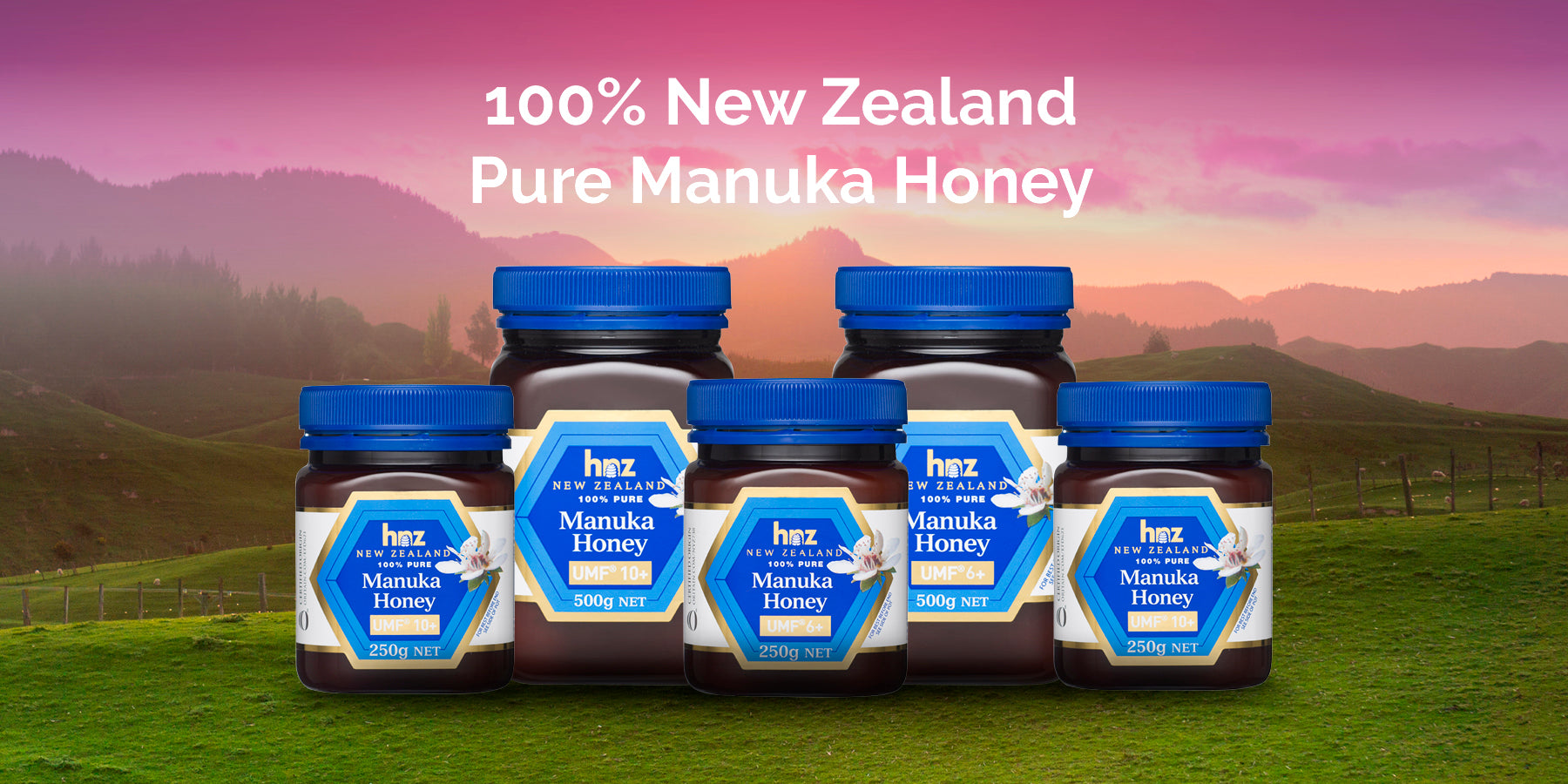
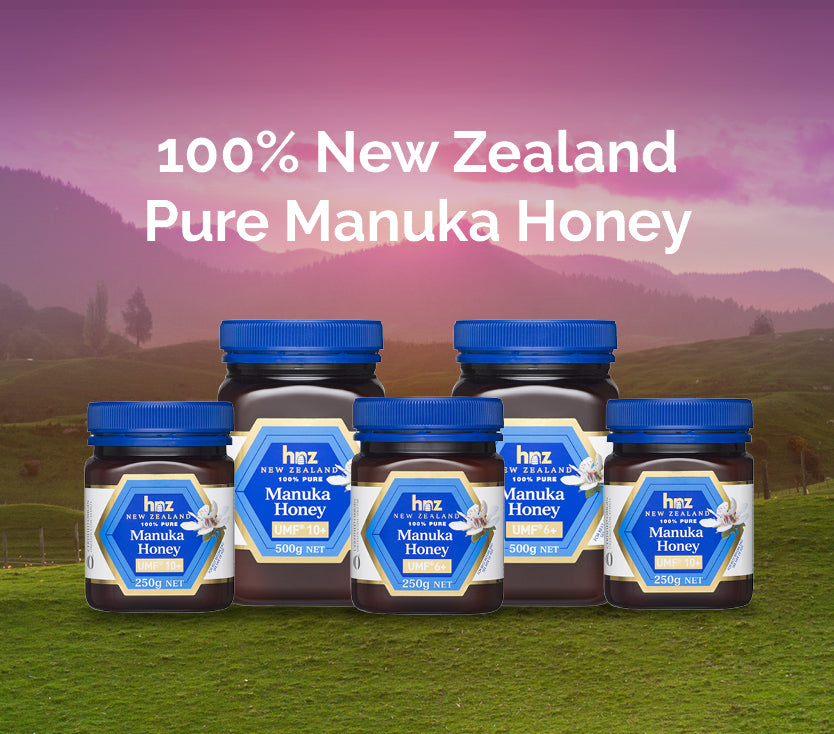
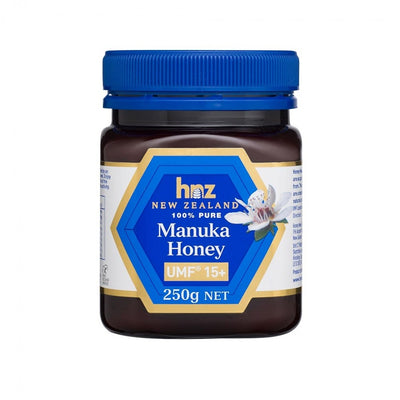
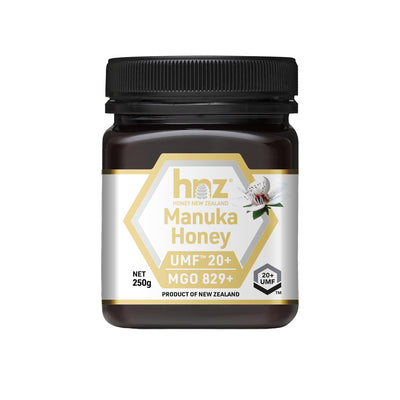
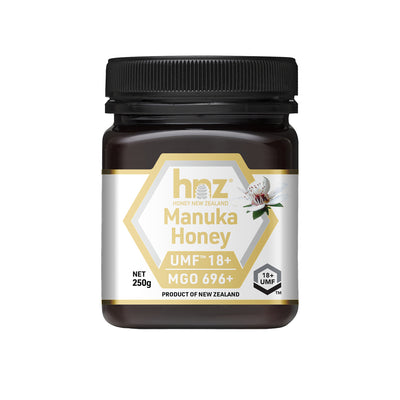
Manuka is a unique evergreen tree, native to New Zealand. Its intensely scented flowers bloom in summer and bees absolutely love them. The Unique Manuka Factor (UMF) found only in selective Manuka honey describes the anti-bacterial property, sought after for its qualities that support health and wellbeing. Independent laboratory testing determines the UMF value after the honey is packaged. The higher the level of UMF, the higher the level of anti-bacterial benefits.


What are the natural health benefits of UMF Manuka honey?

“Manuka honey is a natural medicine.” Dr Peter Molan (University of Waikato, New Zealand)
UMF Manuka honey can be taken by eating or applying to the skin surface. Its anti-bacterial activity has an equivalent concentration to phenol (a common antiseptic). It supports the body’s own immune defences and natural wound healing, can help soothe the throat and can assist digestive health.
The active ingredients and anti-oxidants in Honey New Zealand products can also be used for added vitality, oral health, an active immunity or can assist digestive health.


What is propolis?

Propolis is a resin bees collect from trees forming part of the immune system trees use to defend themselves against disease. Honey bees collect the resin and mix it with their own secretions and beeswax to form propolis which they use to protect the hive.


What are the natural health benefits of propolis?

Propolis is used in the hive for a variety of defensive and protective purposes. The Greeks recognised the healing qualities of propolis, using it for treating wounds. Hippocrates himself, the father of modern medicine, prescribed propolis for promoting the natural healing of the skin and in the gut, both internal and external.
Research in America, Poland and Russia has shown that propolis can help with the skin’s complexion, and with the natural immune response to external allergens.
Propolis has become known as the ‘woman’s friend’. It has been shown to be helpful in the management of periods.


What is bee pollen

Bee pollen is the most nutritionally rich of all products from the beehive. Worker bees collect flower pollen, mix it with nectar and store it in special baskets on their hind legs before returning it to the hive and storing it.
Bee pollen is called natures own perfect food. It has been found to very rich in vitamins and contains all amino acids and almost all known vitamins and minerals.
Since the composition of pollen changes from species to species, variation in absolute amounts of the different compounds can be very high. Protein contents of above 40% have been reported, but the typical range is 7.5 to 35%: typical sugar content ranges from 15 to 50% and starch content is very high (up to 18%) in some wind-pollinated grasses It is high in B-complex and vitamin A, C, D and E. It also contains lecithin, beta-carotene and selenium.


What are the natural health benefits of bee pollen?

Many anecdotal reports suggest bee pollen sold in honey is useful for supporting joint mobility and flexibility. For best effect the bee venom must be absorbed through the mucosal lining of the mouth, since the active components are easily destroyed in the stomach.
NOTE: Products containing bee pollen may cause reaction in allergy sufferers. If you are allergic to bee stings, seek medical advice before using such products.


What is royal jelly?

Royal jelly is the Queen bee’s only source of food. It is a blend of two secretions from the salivary glands of the worker bee. Royal jelly is a creamy white substance with extraordinary food value, often called ‘milk of bees’.


What are the natural health benefits of royal jelly?

As a natural health supplement, royal jelly is a concentrated source of amino acids, lipids, carbohydrates as well as natural hormones, minerals, B vitamins, folic acid, fatty acids and acetylcholine.
Honey New Zealand provides royal jelly in capsule form for an easy and convenient way to receive its health giving benefits on a daily basis.
NOTE: Products containing royal jelly may cause reaction, and in rare cases fatalities, especially in asthma and allergy sufferers. If you are allergic to bee stings, seek medical advice before using such products.

What is the difference between ‘UMF’ & ‘Active’ Manuka Honey?

Not all Manuka honey has UMF (Non peroxide) activity and we differentiate this by using the names UMF Manuka and Active Manuka Honey.

UMF Manuka Honey guarantees a Non Peroxide activity that is based on the UMF testing regime initiated by Prof. Molan. This in turn is measured against a standard Phenol (antiseptic/anti bacterial) solution to gauge the relative strength of the Non Peroxide activity against Phenol. So, UMF 20+ guarantees antibacterial Non Peroxide Activity (UMF) level of 20+.

For example, Honey New Zealand's Active 20+ honey guarantees honey's total antibacterial activity level of 20+. This Total Activity is mostly from the Hydrogen Peroxide activity of honey (as opposed to the Non Peroxide Activity of UMF Honey).

Both Total (Active) and Non Peroxide (UMF) activities are tested by certified independent lab in New Zealand.

In regards to health benefits, UMF is more stable over time, does not break down with heat, light or body enzymes and may even grow in strength over time.

­­­
© 2007 Honey New Zealand - Terms & Conditions